
You don't need to be a developer to build agents for your team
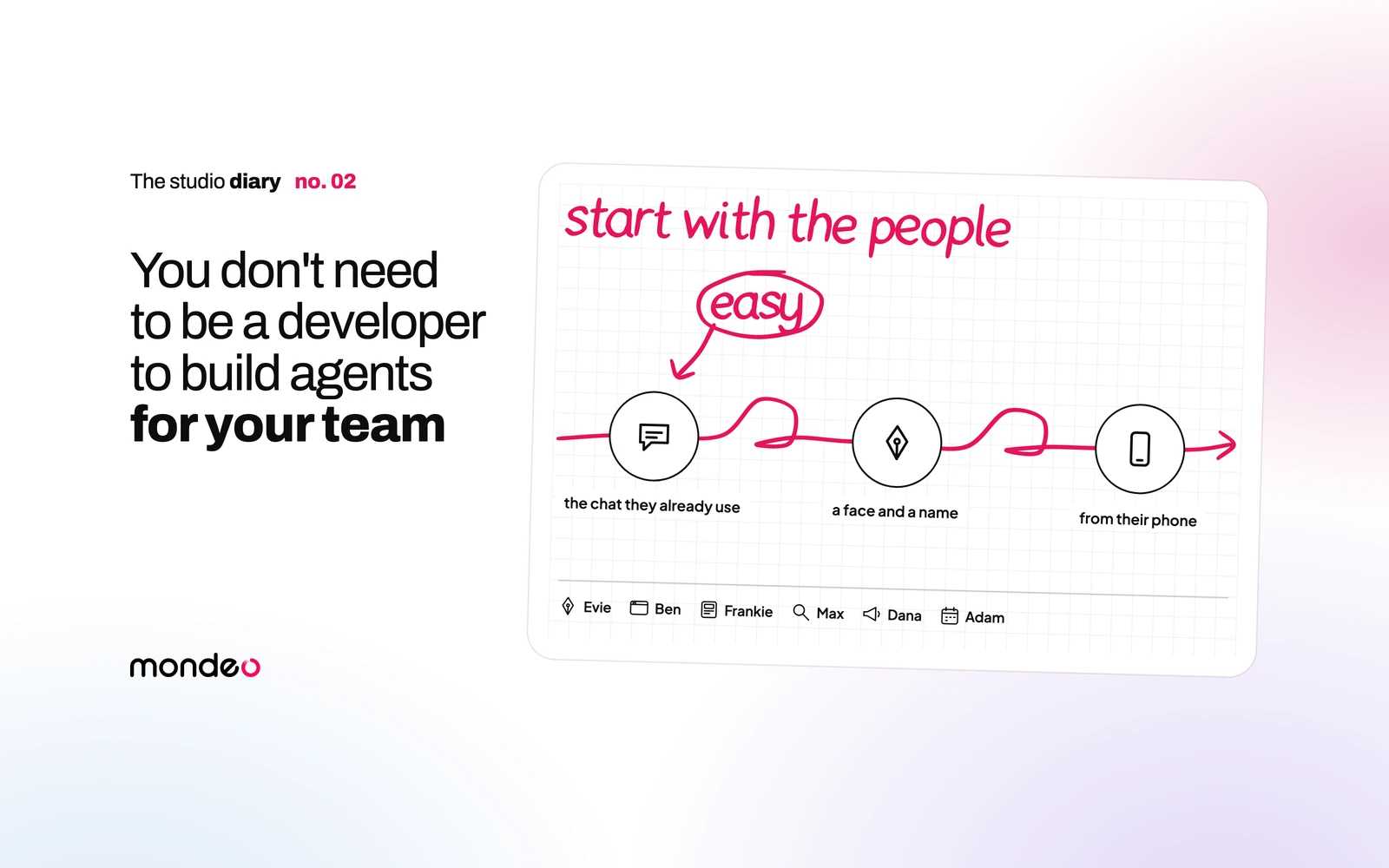
When people hear that our studio works with agents we built ourselves, a question I hear a lot is whether they would need to be a developer to do something like this. My answer is that you don't need to be a developer, you need to think like a product person, or sit down with one, because building agents for a team is mostly about the people who are going to use them.
In episode one I opened one real week in the studio, and this time I want to step back to how it all began, and why my background as a UX and product designer helped me so much along the way.
Why a product person and not only a developer?
The technical side matters, of course, but whether a team actually uses an agent every day is a product question: who it is for, where those people already work, and what would make them come back to it tomorrow. Those are the questions I have been asking about other people's products for years, and this time the product was ours and the users were my own designers.
Why does it have to be easy?
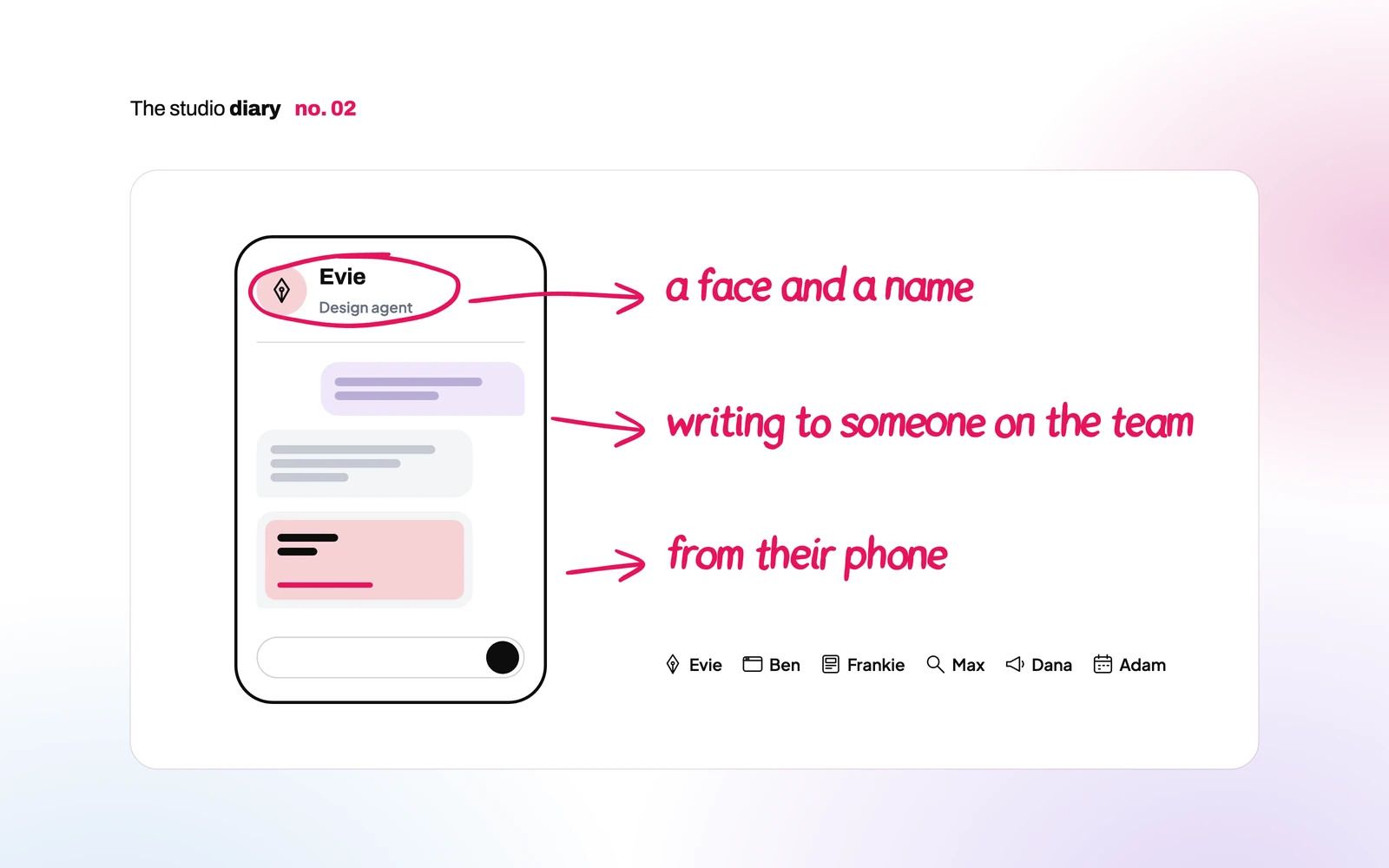
The first thing I understood, almost right away, was that if I wanted this to work it had to be easy for the designers, which meant the agents had to live in the chat they already use every day, work from their phone, and let them talk to an agent the way they would talk to any other teammate. That is why each agent got a face and a name, so that asking Evie, our design agent, or Ben, our website agent, for something feels like writing to someone on the team rather than learning a new tool.
And the whole process had to be easy, not only the conversation, so the agents open their own tasks and keep track of the work themselves, and a designer asks for what they need while the paperwork around the job takes care of itself.
How do you know where people get stuck?
In the first few weeks I was in their channels all the time, reading everything, the same way you sit in on user testing when you launch a new product. The designers were my users, and I wanted to see where they got stuck so the next version could be easier for them.
It was about learning from them, never about checking on them, and I am still there in their channels with them, listening.
What happens when a product meets a case you never planned for?
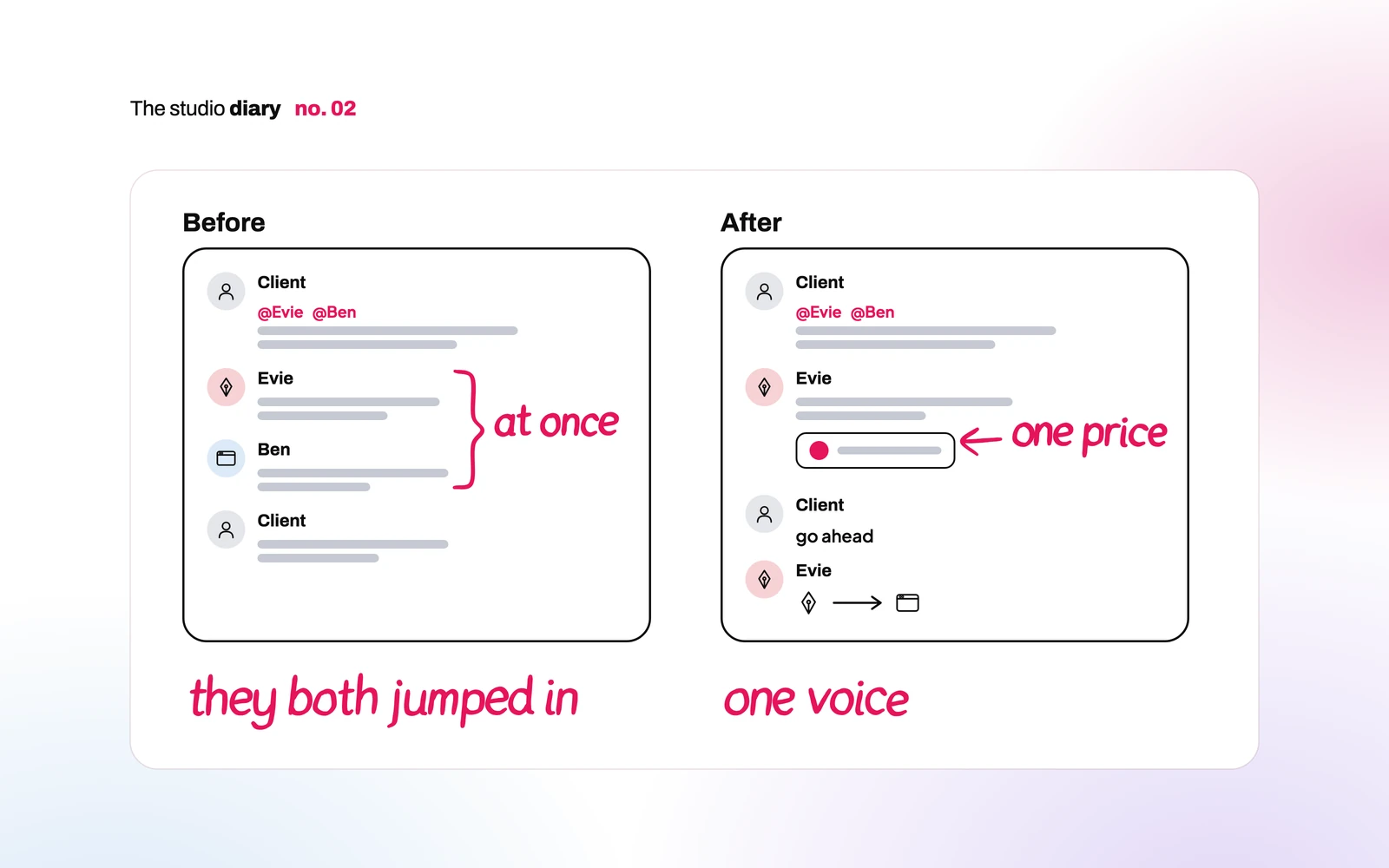
A product is never finished, and the agents reminded me of that when we opened our design desk to clients. One client wrote a brief and tagged two of our agents in the same message, Evie and Ben, and they both jumped in like two eager teammates raising a hand at once: Ben said he had it, Evie asked what exactly she should go ahead with, and the client had to step in and explain which of them they had meant.
It was an edge case I hadn't thought of, because it simply never crossed my mind that a client would tag two agents at once. This is where it takes a product person to look at that thread, see that it is a confusing experience for the client, and decide what the right flow should be.
So we decided that one agent owns the thread and the client hears one voice, Evie gives one price for the whole job, and when the client says go ahead, Evie starts the work and hands the website part on to Ben. We fixed it the same day, so it would not happen to the next client.
And that is really what our agents are, a product we own, use every day and keep making better, one edge case at a time.
So where should you start?
If you want agents for your team, start with the people who will use them, not with the technology. Find out where they already talk, what slows them down and what they would happily never do again, then build for that, and stay close enough in the first weeks to see where they get stuck, because the first version is only where it begins.
You can do most of that thinking without writing a line of code, and if thinking like a product person doesn't come naturally, sit down with one before you build anything.
There is more from inside the studio in the next episode, and if you are building agents for your own team, or still wondering whether you can, write to me with your question.